

Submitting an UploadBlog guest post usually means asking an editor to review your article, not uploading it directly to a public page. If you are using blogging to support content marketing, that difference affects how you reach a new audience and build your brand.
An editorial submission means sending a topic proposal or article draft to a publication’s editor for review before publication. Each host publication sets its own acceptance rules, permitted links, and submission routes, so one site’s process may not work for another.
You will learn how to check those details before sending anything, then choose a suitable publication and prepare a submission that fits its process. First, it helps to understand what a guest post is and what “UploadBlog guest post” might mean in practice.
What Is an UploadBlog Guest Post?
A guest post is an article written by someone outside a host publication, for publication under that writer’s name. Usually, the writer submits the work for editorial review rather than posting it directly to the publication’s public pages.
“Upload” can mean sending a draft or using a contributor dashboard, but only when the publication provides that route. A byline identifies the author and may direct interested readers to an approved profile or link. Guest posting is often unpaid, though terms vary by publication.
A guest post is an outside contributor’s article, and the host publication controls how it is reviewed and published.
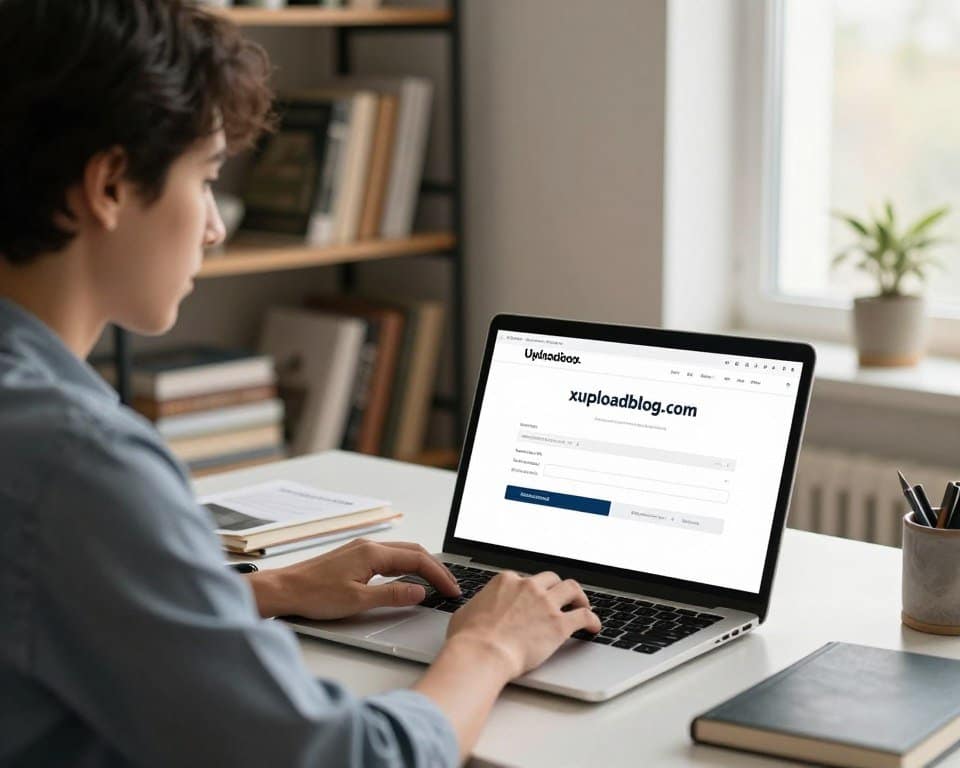
People searching to upload blog guest post online may mean either submitting a file or using a platform that allows direct publishing. Those are different processes: an editorial submission goes to an editor, while self-publishing places content on a platform under the writer’s control.
The phrase upload blog guest post free does not establish that a named publication accepts contributions or publishes them without charge. UploadBlog describes resources about blogging and online publishing in its overview of its publishing topics, but that does not confirm a contributor route.
So treat the term as a description of a possible process, not proof of access. Before preparing a pitch, confirm whether UploadBlog actually offers a submission route and what rules apply to it.
How Can You Confirm UploadBlog Accepts Guest Posts?
A publication may have guest articles on its site without clearly saying whether it is open to new contributors. Check its current instructions before you contact an editor or start writing.
Past guest posts show that outside writers have published there, not that submissions are open now. Use a short verification checklist to distinguish a current opportunity from an old byline or an outdated page.

- Look for current contributor guidelines, including the date or details showing they still apply.
- Check recent articles for bylines from writers outside the publication’s regular team.
- Inspect contact and contributor pages for an editor, submission form, or stated email route.
- Confirm restrictions on topics, fees, links, exclusivity, and accepted file formats before preparing work.
A page labeled “write for us guest post” can be a useful clue, but read beyond the heading. Look for specific instructions, a named editorial contact, and terms that match the publication’s current site.
UploadBlog has information about blogging and publishing across websites and other platforms. That subject matter alone does not confirm that it accepts guest posts. Its overview of UploadBlog’s publishing options also points readers toward checking the site’s current rules.
Once you have confirmed that a route exists, decide whether the publication is worth your time. The next test is whether its readers and editorial focus suit your goal.
Which Guest Posting Sites Are Worth Your Time?
The best guest posting sites are publications whose readers match the people you want to reach. Audience fit matters more than broad reach alone, especially when your goal involves trust, professional visibility, or a specific business audience.
Prioritize topical relevance, editorial quality, reader engagement, and a contribution effort you can support. A large website may offer little value if its readers rarely care about your subject or the publication rarely covers it.
Use this comparison to narrow your target. Where can I submit my blog? Start with relevant publications that have a current contributor route, rather than an unverified list of guest posting free sites.
| Publication type | Audience fit | Best reason to contribute | Main fit check |
|---|---|---|---|
| Specialist niche blog | Readers share a defined topic or problem | Reach a closely matched audience | Check subject depth and active readership |
| Industry trade publication | Readers work in or follow one sector | Build relevant professional visibility | Check its contributor criteria and editorial standards |
| Broad general publication | Readers span multiple interests | Introduce an idea to a wider audience | Check that the topic clearly fits a section and its readers |
Look at the publication’s recent activity, not only its total audience claims. Current articles, meaningful reader responses, and a clear editorial focus can indicate a better fit than a high number of pages or followers.
Also count the work involved. A demanding review process may be worthwhile when you can reach the right people, while a quick placement may not justify time spent on a mismatched audience.
After choosing a promising host publication, study what its editors actually publish. Those patterns reveal the standards your submission needs to meet.
What Should You Check Before Pitching?
Compare 10-20 popular articles on a target publication before developing your pitch. Look for repeated choices in headlines, length, structure, and evidence, not one unusual feature from a single post.
Use popular articles as clues, not as wording or topics to copy. Find pieces the site highlights, shares, or places prominently, then compare them with recent articles to see whether its style has changed.
Record approximate word counts, tone, subheadings, links, evidence, and media. You can also score formality from 1 to 3: 1 for casual language, 2 for a balanced style, and 3 for formal prose.
| Element | What to record | How it guides your draft |
|---|---|---|
| Headlines | Length and repeated patterns | Match the publication’s style without copying a headline |
| Article length | Word counts and a rough average | Plan a comparable scope unless guidelines specify otherwise |
| Structure | Subheading count, case, and punctuation | Use a familiar reading rhythm |
| Links and evidence | Internal or external links and the kinds of proof used | Support claims and follow linking rules |
| Media | Image, video, or visualization use | Prepare only suitable assets and confirm requirements |
Popular articles may show which questions attract readers, but they are not permission to reproduce wording or repeat a subject. Check whether similar coverage already exists before you borrow an angle.
Take notes that separate what is common from what is required. Editorial guidelines set the rules; patterns in published posts help you understand how to meet them in practice.
With those observations in hand, you can develop an original idea that feels familiar to the publication’s readers without repeating its existing work.
How Do You Develop an Article Idea That Fits?
If readers struggle to plan a weekly meal, a fresh guest post could show them how to build a flexible shopping list around three core ingredients. Narrow the problem instead of pitching a broad topic such as “healthy eating.”
Your idea should fit your expertise and solve a problem the host publication’s audience actually has. Audience overlap matters, but readers still need a new method, useful perspective, or timely context.
Start with a recurring question in the publication’s comments, newsletter, or articles. Search its site for the subject and note what existing posts explain, which readers they serve, and what questions remain unanswered.
Then choose a distinct angle. You might offer a practical method, compare two approaches, update an older discussion with relevant context, or show how a specific group can apply familiar advice.
Do not pitch a topic already covered on the site simply because the existing article is old. Age alone does not make an idea new; check whether the post still answers the reader’s question before proposing an update.
Use your own experience carefully. Expertise can help you establish authority, but the article should make that knowledge useful to readers rather than turning the topic into a personal résumé.
Once the idea has a clear reader, problem, and fresh angle, check how the publication wants to receive it. Some editors want a pitch; others ask for the complete draft.
Should You Pitch an Idea or Submit a Finished Draft?
One publication may ask for a pitch before you draft, while another may request a complete article with your first submission. Follow the stated instructions, since each host publication sets its own process.
The publication’s submission rules take priority over general outreach advice. Sending a full draft when an editor requested a short proposal can waste your effort, while a pitch alone may be incomplete when the site requests a finished article.
| What the guidelines say | Send first | Next action |
|---|---|---|
| Pitch or topic proposal requested | A concise personalized email with the proposed topic, reader value, and relevant expertise | Wait for approval before drafting |
| Completed draft requested | A finished article in the requested document or submission format | Include the requested bio and supporting materials |
| No submission instructions found | A short inquiry to the appropriate editor asking about the process | Do not attach an unsolicited long draft or assume the site accepts contributions |
A good pitch makes the editor’s decision easy. State why the idea suits that publication, what readers will gain, and why you can write it well.
Keep your email focused on one proposal instead of listing unrelated ideas. A long menu makes the editor work harder to judge each topic and can make your research appear shallow.
If the site provides no route, ask a brief process question rather than treating silence as permission to send a full article. Once the right material is requested, prepare it to the publication’s editorial standards.
How Do You Write a Guest Post Editors Can Use?
A sales-heavy draft tells readers to buy your service; a useful guest post helps them solve a real problem. Lead with the reader’s need, then explain what they can do with your advice.
Make the article editorial, not an advertorial, and follow the publication’s stated word-count and link rules. A suitable author bio may mention your work when the host publication allows one.
Match the publication’s tone and format without copying its wording. State a clear argument early, break complex advice into manageable steps, and give readers actions they can use after finishing the article.
Support factual claims with reliable evidence and check names, figures, and links. Use original wording, credit sources accurately, and remove claims you cannot confirm before sending the draft.
Proofread for clarity as well as spelling. Read each paragraph aloud, cut repeated points, and check that headings describe the information beneath them rather than promising more than the text delivers.
- Check that the reader problem and article promise match.
- Include advice with practical actions readers can use.
- Support claims with evidence and check them for accuracy.
- Follow the publication’s guidance for style and structure.
- Keep promotional language out of the article body.
Editors may ask for changes even when a draft follows the rules. A clean, reader-focused article gives them a stronger starting point and makes revisions easier to handle.
When the article is ready, assemble the bio, links, and other materials the host publication specifically requests.
What Should You Include With Your Submission?
An editor who receives a draft without the requested bio or image may need to pause review and ask you to send them later. Complete the package using the publication’s own instructions.
Include only requested materials and permitted links. A generic upload blog guest post example can help you organize an email, but it is not an official UploadBlog template or proof of that publication’s process.
- Attach the requested draft file or share the document link in the required format.
- Add a concise author bio that follows any word or link limits.
- Include an approved headshot if the publication requests one.
- Provide source notes and image files with usage rights if required.
- Suggest a byline link or call to action only when allowed.
Keep the email brief and label files clearly. For example, a subject can name the proposed article and your name, so an editor can identify the message later.
Subject: Article submission: [topic] by [author name]
Hello [editor name],
I’m submitting a draft about [topic], which suits your readers because [one clear reason]. The requested draft is attached, with my bio included below.
Thank you for your time,
[Your name]
This example is generic, not an UploadBlog-specific template. Replace the bracketed details and follow the publication’s requested format rather than copying a sample package blindly.
Before sending, check that every file opens and that the email does not include unapproved promotional material. Then consider what links can do and what they cannot promise.
How Do Guest Post Backlinks and Promotion Work?
A link to a related guide on the host publication can help readers explore its own coverage; an unrelated link to your product may distract them. Relevance is the test for both links and promotion.
Guest post backlinks do not guarantee higher search rankings or website traffic. Link rules vary, so follow the host publication’s instructions and include links only when they serve the reader.
Internal links connect readers to other pages on the host publication. A permitted link to your own website is different: the editor may allow it in the byline, article, or neither.
A relevant byline can help interested readers find your work and understand your expertise. It is not a promise of clicks, leads, or improved search performance.
Guest blogging can also extend an article’s reach when you share it with people who care about the subject. Choose relevant social channels or professional communities, and add context instead of posting the same link without explanation.
Mass submissions created mainly to obtain links are a poor use of your time. Generic articles and irrelevant backlinks do little for readers, and they can damage relationships with editors.
Expect editorial review, possible revisions, and a decision that may take time. After sending the submission, follow the publication’s process and wait for its stated response window.
What Happens After You Submit a Guest Post?
An editor may request changes to a draft instead of accepting or rejecting it immediately. Treat revisions as part of editorial review, and respond to the specific points the editor raises.
Record your submission and follow the host publication’s stated response process. A request for edits does not guarantee publication, but it gives you a clear next task.
An editor’s revision request is part of review, not a final acceptance or rejection.
- Record the submission date and the route you used, such as a form or editor email.
- Wait for the stated response window, or send one brief follow-up if none is stated.
- Make requested revisions carefully and ask a focused question if an instruction is unclear.
- After publication, share the article where relevant and respond thoughtfully to reader comments.
Silence or rejection does not prove that your topic has no value. Editors balance many submissions, and a suitable idea may need a different angle or publication.
Do not send a rejected draft elsewhere until you understand the first publication’s terms and any exclusivity expectations. Some editors may expect a draft to remain under review until they decide.
Keep notes on feedback, response times, and the final outcome. That record can help you improve future guest posts without assuming every publication uses the same process.
Your next move is simple: make one well-matched submission, then give the editor room to review it.
Conclusion
One well-matched submission is more useful than many generic emails sent to unrelated sites. A relevant article that follows the host publication’s instructions gives its readers real value and helps you build relationships around your expertise.
Start with one publication whose audience fits your subject and goal. Identify that host publication, then check its current contributor instructions before drafting or sending anything.